Cabinet Box Construction: Plywood vs. Particle Board vs. MDF — What You're Actually Paying For
Published August 20, 2026 · Updated August 30, 2026
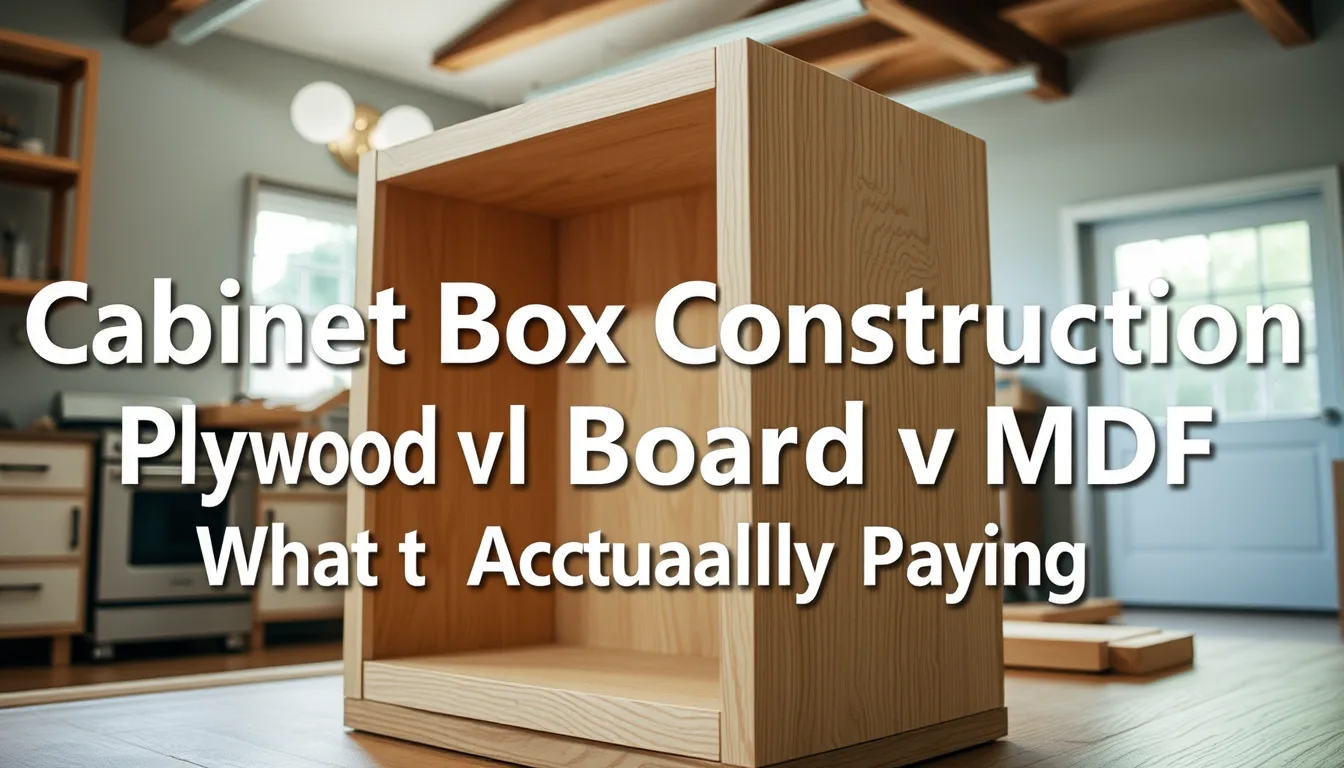
Cabinet boxes are built from three primary materials—plywood, particle board, and MDF (medium-density fiberboard)—each offering different durability, moisture resistance, and price points that directly affect how long your cabinets last and how well they hold hardware. Understanding these structural differences helps homeowners in Charlotte, NC and surrounding areas make informed decisions when selecting custom cabinetry for kitchens, bathrooms, and storage projects with New Life Building Supplies.
What is plywood cabinet construction and why does it cost more?
Plywood cabinet boxes are made from thin wood veneers glued together in alternating grain directions, creating a strong, dimensionally stable panel that resists warping and holds screws securely even when reinstalled multiple times. This cross-grain construction makes plywood the most moisture-resistant option, which matters in kitchens and bathrooms where humidity and occasional leaks occur. Plywood costs more than particle board or MDF because it requires more manufacturing steps and uses higher-grade wood materials, but it typically outlasts other options by decades in real-world conditions.
How does particle board perform in cabinet boxes?
Particle board (also called particleboard or chipboard) consists of wood chips and sawdust bonded together with resin, creating a smooth, uniform material that costs significantly less than plywood but lacks the same structural strength. It holds screws reasonably well on the first installation but tends to strip out if hardware is removed and relocated, which becomes a problem during repairs or remodels. Moisture exposure causes particle board to swell permanently—once water penetrates the core, the material expands and loses integrity, making it a poor choice near sinks, dishwashers, or in humid environments unless it's properly sealed and protected.
What are the advantages and limitations of MDF for cabinet boxes?
MDF (medium-density fiberboard) is made from fine wood fibers compressed with resin into dense, smooth panels that offer a flat surface ideal for painted finishes but weigh more than plywood or particle board. It holds screws better than particle board but not as securely as plywood, and it shares particle board's vulnerability to moisture—water exposure causes irreversible swelling and damage. MDF works well for painted cabinet doors and decorative panels, but as a box material it's heavier to install, harder to repair, and requires careful sealing around edges to prevent moisture infiltration in kitchens and baths.
Which cabinet box material should you choose for different projects?
Plywood is the best choice for kitchens, bathrooms, laundry rooms, and any space where moisture, heavy use, or long-term durability matter—premium USA-made custom cabinets typically use plywood construction for this reason. Particle board may be acceptable in dry, low-traffic areas like bedroom closets or office storage where budget is the primary concern and the cabinets won't face moisture or frequent hardware adjustments. MDF works better as door and drawer front material than as box construction, though some manufacturers use it in combination with plywood frames to balance cost and performance in mid-range cabinetry lines.
What questions should I ask when comparing cabinet quotes?
Always ask specifically what material the cabinet boxes are made from—not just the doors—since box construction determines structural longevity while door material affects appearance. Request the thickness of the box material (plywood should be at least 1/2 inch, preferably 5/8 inch or 3/4 inch for heavy-duty applications) and ask whether backs and bottoms use the same material or a thinner substitute. Verify whether the warranty covers structural issues separately from finish, since plywood warranties typically last longer because the material itself is more durable under real-world conditions.
Key Takeaways
Plywood cabinet boxes offer superior moisture resistance, screw-holding strength, and longevity compared to particle board and MDF, justifying the higher upfront cost for kitchens and bathrooms. Particle board is a budget option suitable only for dry, low-traffic areas where repairs and moisture exposure are unlikely. MDF works better for doors and decorative elements than structural box construction due to its weight and moisture sensitivity. Always verify box material thickness and construction separately from door style when comparing cabinet quotes. Premium custom cabinetry typically uses plywood construction because it outlasts alternatives and maintains structural integrity over decades of use.
| Material | Moisture Resistance | Screw Holding | Durability | Best Use |
|---|---|---|---|---|
| Plywood | Excellent — resists swelling | Excellent — holds through reinstalls | Decades of use | Kitchens, baths, high-use areas |
| Particle Board | Poor — swells permanently when wet | Fair — strips out if screws removed | 10-15 years in dry conditions | Dry closets, budget projects |
| MDF | Poor — swells like particle board | Good — better than particle board | 15-20 years if moisture-protected | Painted doors, decorative panels |